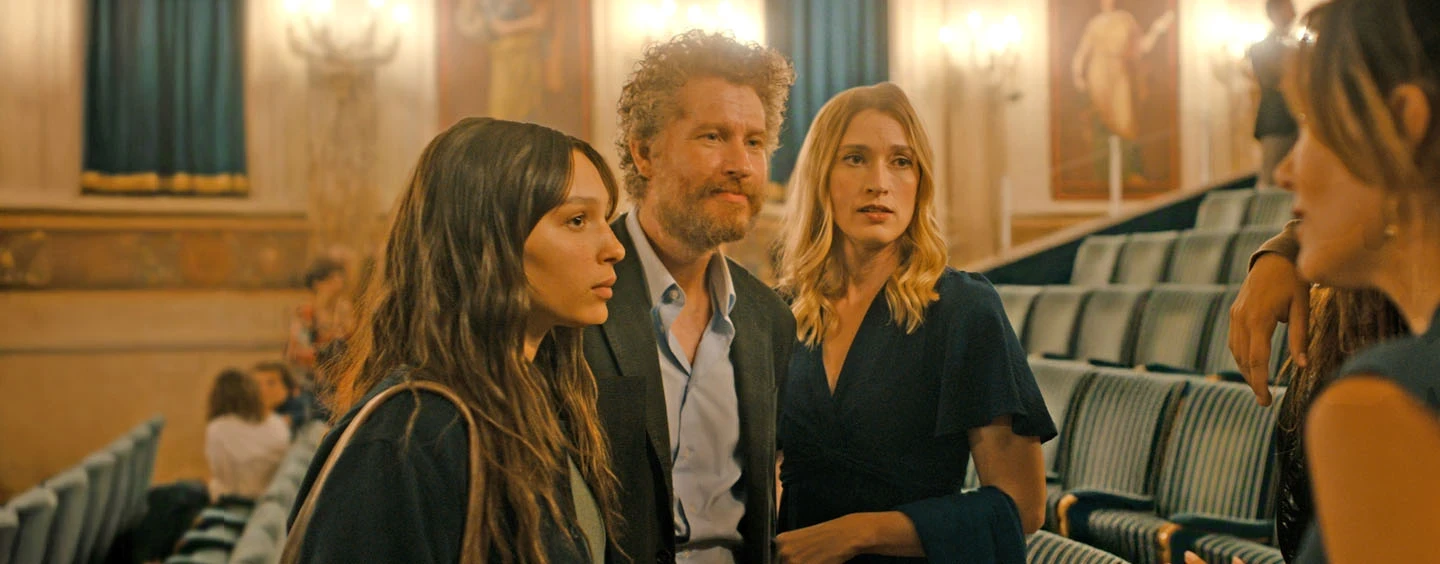
"Fühlt Ihr Meiner Stimme": A Heartfelt Italian CODA Story on Netflix That Resonates Globally
Netflix continues its tradition of bringing compelling international stories to global audiences, and one recent addition that has captured hearts is the Italian drama, "Fühlt Ihr Meiner Stimme". This film, whose title translates to "Do You Feel My Voice?", is far more than just another foreign-language drama; it's a deeply moving exploration of family, duty, and the arduous journey of self-discovery, all set against the picturesque backdrop of the Italian countryside. For those searching for insights into the captivating narrative and the talented individuals who comprise the
Fühlt Ihr Meiner Stimme Film Besetzung, this article delves into what makes this movie a must-watch.
At its core, "Fühlt Ihr Meiner Stimme" is an Italian adaptation of the acclaimed French film "Verstehen Sie die Béliers" (released internationally as "The Bélier Family") and its Oscar-winning American remake, "CODA". While the premise may sound familiar, this latest iteration brings a distinctly Italian flair and emotional depth that gives the story a fresh, authentic feel. It navigates the unique challenges and profound bonds within a family where the protagonist, Eletta, is the sole hearing member in a world of silence.
Unveiling the Heart of "Fühlt Ihr Meiner Stimme": A CODA Story Reimagined
The acronym CODA stands for "Child of Deaf Adults," a term that describes hearing children whose parents are deaf. These individuals often find themselves living between two distinct worlds: the visual, expressive realm of sign language within their family and the auditory, spoken world of wider society. This duality frequently thrusts them into adult responsibilities far earlier than their peers, making them the indispensable bridge for their families. "Fühlt Ihr Meiner Stimme" masterfully encapsulates this experience through its 17-year-old protagonist, Eletta.
Eletta (portrayed by the compelling Sarah Toscano) lives in a small, idyllic northern Italian village, where her family runs a donkey farm. Her daily life is a continuous balancing act of immense responsibility. From negotiating the sale of milk and cheese at the local market to managing official paperwork and even delicate medical consultations, Eletta is the constant voice for her deaf parents and brother. Without her, the family's communication with the hearing world would effectively cease. This overwhelming burden often leaves her little room to explore her own identity or aspirations. The film brilliantly portrays the humor, awkwardness, and profound love that coexist with this unique family dynamic, showcasing scenes of everyday life where Eletta's role as interpreter leads to both touching and laugh-out-loud moments.
The narrative takes a pivotal turn when Eletta, driven initially by a crush on a fellow student, joins the school choir. Here, her extraordinary singing talent is discovered by an astute and passionate music teacher. This revelation ignites a spark within Eletta, presenting her with an agonizing dilemma: pursue her burgeoning passion for music and a potential future at a prestigious music academy in Turin, or remain the indispensable voice and pillar of her family, who seemingly need her more than ever. This conflict forms the emotional crux of the film, resonating deeply with anyone who has grappled with the tension between personal ambition and familial duty.
The Talented Cast: Who Brings "Fühlt Ihr Meiner Stimme" to Life?
A story as emotionally charged and nuanced as "Fühlt Ihr Meiner Stimme" relies heavily on its cast to convey its authenticity and impact. The authenticity of the
Fühlt Ihr Meiner Stimme Film Besetzung is paramount, particularly in portraying the deaf characters with dignity and realism. While specific names beyond Sarah Toscano are typically highlighted in the film's official credits, the power of such a film often lies in the ensemble's ability to communicate non-verbally and create believable family dynamics.
Sarah Toscano, as Eletta, carries the film with remarkable grace and vulnerability. Her portrayal of a teenager caught between two worlds is both relatable and deeply moving. She manages to convey the weight of Eletta's responsibilities, her internal conflict, and the blossoming of her own dreams, often through subtle expressions and powerful vocal performances. The effectiveness of the deaf characters, played by actors who authentically embody their roles and communicate through Italian Sign Language, is equally crucial. Their interactions with Eletta – full of misunderstanding, frustration, and unconditional love – are what ground the film in reality. A well-chosen cast ensures that the cultural specificities and universal themes are conveyed with genuine emotion. The chemistry among the family members, particularly how they communicate and navigate daily challenges, is central to the film's success. It's a testament to the casting director's vision that the chosen actors could deliver such a heartfelt and believable family portrait.
Eletta's Dilemma: Music, Family, and Finding Her Own Voice
Eletta’s journey is a powerful allegory for the universal struggle of identity formation, magnified by her extraordinary circumstances. Her life as a CODA means her personal identity has often been subsumed by her role as her family’s interpreter. "Who am I, if not the one who speaks for others?" is a question she implicitly grapples with throughout the film. Her discovery of singing is not just about a talent; it's about finding her own literal and metaphorical voice, a unique form of expression that belongs solely to her.
The conflict between her burgeoning musical aspirations and her deeply ingrained sense of familial responsibility forms the dramatic tension. Should she prioritize her family's immediate, practical needs, or pursue a path that promises personal fulfillment but might lead her away from them? This isn't merely a selfish pursuit; it's a fundamental human need to explore one's potential and forge an individual path. Many young adults face similar dilemmas as they transition from dependence to independence, often feeling the tug-of-war between their family's expectations and their own desires. While Eletta's situation is unique due to her family's deafness, the emotional resonance of her struggle is universal. Exploring this complex internal battle is precisely what makes "Fühlt Ihr Meiner Stimme" so compelling and relatable. For a deeper dive into this specific conflict, you might enjoy
Eletta's Dilemma: Finding Her Voice Beyond Family's Silence in "Fühlt Ihr Meiner Stimme".
Italian Charm and Universal Appeal: Why This Remake Resonates
One of the strengths of "Fühlt Ihr Meiner Stimme" lies in its ability to take a proven narrative framework and infuse it with distinct Italian character. While "CODA" transported the story to a rugged fishing village in Massachusetts, this Italian adaptation returns the narrative to its European roots, grounding it in the rich, vibrant landscapes of northern Italy. The Mediterranean scenery, the bustling local markets, and the close-knit community atmosphere provide a beautiful, authentic backdrop for Eletta’s emotional journey. This "südeuropäischem Temperament" – a blend of warmth, expressiveness, and familial passion – adds a unique flavor that distinguishes it from its predecessors.
The film successfully blends moments of lighthearted situational comedy, born from the communication challenges, with profound emotional depth. The integration of Italian music, which often carries significant cultural weight and emotional resonance, further enhances the viewing experience. It's a testament to the timeless nature of the story that it can be retold in different cultural contexts and still strike a chord with audiences worldwide. The core themes – the burden of responsibility, the liberating power of music, and the search for personal identity within family bonds – are universally understood, regardless of language or setting. This universality is perhaps the greatest strength of this narrative, demonstrating that some stories transcend borders and prove impactful in any interpretation. To understand more about how this film stands alongside its predecessors, consider reading
Fühlt Ihr Meiner Stimme: The Italian Remake of CODA Explored.
Conclusion
"Fühlt Ihr Meiner Stimme" is a poignant and beautifully crafted film that offers a fresh perspective on a beloved story. It invites viewers into the unique world of a CODA, exploring the sacrifices, challenges, and profound love that define such an existence. With its engaging plot, the compelling performance by Sarah Toscano, and a supporting
Fühlt Ihr Meiner Stimme Film Besetzung that brings authenticity to the screen, this Italian Netflix original is a testament to the enduring power of storytelling. Whether you're familiar with "CODA" or "Verstehen Sie die Béliers" or discovering this narrative for the first time, "Fühlt Ihr Meiner Stimme" promises an emotional, thought-provoking, and ultimately uplifting viewing experience that celebrates family bonds and the courage to find one's own voice.